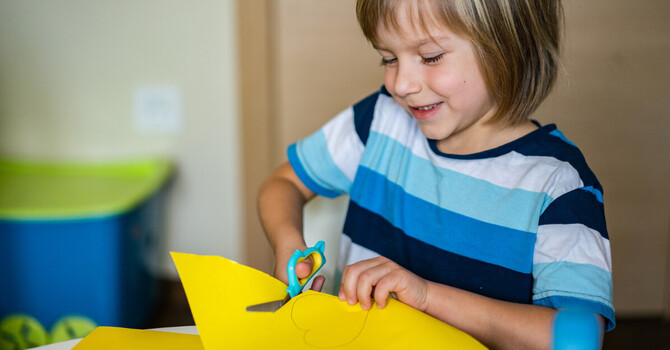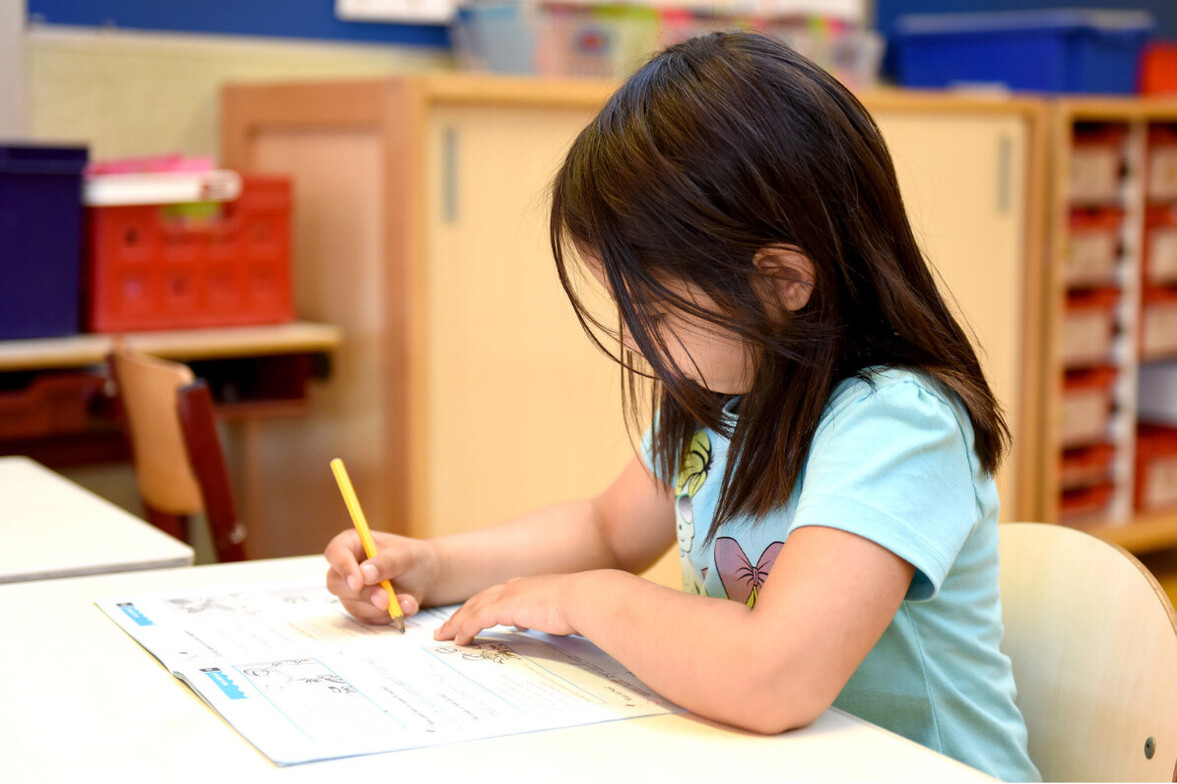
The first few weeks of a new homeschool year show you a lot about your child's hands. You set out a handwriting sheet or a math workbook, and you quickly see which skills are ready and which ones need more support.
As a pediatric occupational therapist, I help children develop their pencil control and pencil grasp pattern. The types of underlying skills needed for pencils and writing are the same ones as cutting with scissors, copying shapes, buttons, zippers, and shoelaces.
Fine Motor and Pencil Skills
Before a child can control a pencil, they need steady shoulders and a strong core. A child who leans on the table, wraps their feet around the chair legs, or tires quickly during writing may be working hard just to stay upright.
Pencil grasp develops in stages too. Most toddlers use a whole-hand grip, then move toward a tripod grasp (thumb, index, and middle finger) between ages 4 and 6. A grasp that looks unusual isn't always a problem. What matters most is whether it's comfortable, the writing is readable, and your child can write without hand fatigue or pain.
Try this:
- Check the setup. Your child's feet should rest flat on the floor or a box, and the table should sit around elbow height.
- Work on a vertical surface like an easel, a whiteboard, or paper taped to the fridge. This builds shoulder stability and good wrist position.
- Use broken crayons. Small tools naturally encourage a fingertip grasp.
- Warm up with tweezers, clothespins, or peeling stickers for 3 to 5 minutes before handwriting.
How an Occupational Therapist Helps
An OT figures out WHY a skill is hard, not only which skill is hard. Two kids can struggle with handwriting for very different reasons. One might have low hand strength, difficulty adjusting the amount of pressure they put on a pencil, or have trouble with their visual motor skills. The strategy that works depends on the reason.
At Empower Kids OT, I start with an evaluation using standardized assessments, along with screening for visual motor skills and vision. From there, we build a plan together around your child's goals and your homeschool routine.
Sessions happen privately in your home or with a group at your co-op, which is a natural fit for homeschool families. We practice with your materials, and you learn strategies to use all week. You know your child best. My job is to help you understand the “why” behind each skill and give you a clear next step.
If you're in Central New York and want to talk through what you're seeing at your table this fall, book a free 15-minute consultation at www.empowerkids-ot.com. We'll talk about your child's skills and whether OT is a good fit for your family or co-op.
Disclaimer: This article is for educational purposes only and is not medical advice. Reading it does not establish a therapeutic relationship with Empower Kids OT. Every child is different, so talk with your child's doctor or a licensed occupational therapist about your child's specific needs.