As a parent, it can be really hard to watch your child struggle with bowel training. As a pediatric occupational therapist and certified autism specialist, I’ve worked with families who are going through this exact thing. Here are my quick tips:
Rule #1: Soft poops come first
Before you ask your child to poop in the toilet even once, their stools need to be soft. Not soft sometimes. Soft every day, for a steady stretch of time.
Why? Most kids who withhold have had a painful poop at some point, and their body remembers it. Holding starts to feel safer than letting go. But holding makes the next poop bigger, harder, and more painful, so the cycle keeps going.
Your child's first poop in the toilet needs to be an easy, painless one. If it hurts, the toilet becomes associated with pain. Talk to your pediatrician about how to get stools soft and keep them that way. Once that's steady, you're ready to look at the bathroom.
Look at the bathroom through your child's senses
Autistic kids often notice details the rest of us tune out. A bathroom that feels fine to you might feel cold, wobbly, or overwhelming to them. If your child can't tell you what bothers them, watch for clues like covering their ears, flinching, refusing to sit, or rushing out.
Pick one or two of these to try first.
1. Stop the splash
Does water splash up when the poop drops? That surprise can be enough to make a child hold it next time. Lay a few squares of toilet paper on the water before they sit to soften the landing.
2. Support their feet
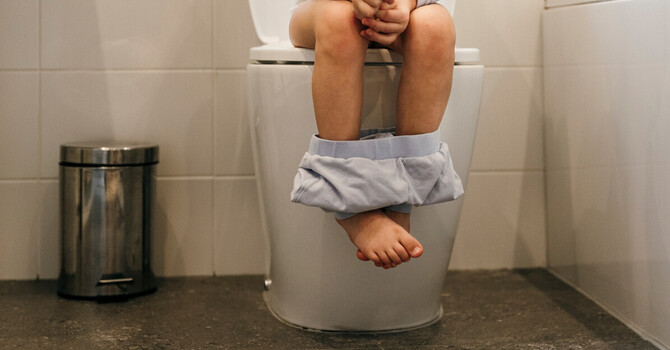
Your child's feet should rest flat on something solid, with knees a little higher than hips. A sturdy step stool works well. This position relaxes the muscles that let poop out, so going is easier. Dangling feet make it harder. For autistic children who experience gravitational insecurity (significant fear of movement due to sensory processing differences), dangling feet can actually feel like a threat and creates a lot of difficulty with relaxing.
3. Make the seat feel safe and warm
An adult seat can feel huge and tippy to a small body. A snug potty seat insert helps them feel stable. Some kids like a padded seat, and some need it warm. If the bathroom runs cold, try a heated lap pad or a warm blanket over their lap so their body can relax.
4. Check the light, smell, and clutter
Bright overhead lights can feel harsh, so try a lamp or nightlight instead. Notice smells too, like strong air fresheners or cleaning sprays. Clear extra stuff out of their line of sight so the space feels calm.
5. Ask yourself: privacy or company?
Some kids want you right next to them. Others need you to step out. Neither is wrong. Follow your child's lead. You can sit close, wait outside the door, or check in after a minute.
6. Start with seconds, not minutes
Sitting for one or two seconds counts. Celebrate it, then let them get up. Add a few seconds at a time as they get more comfortable. Right now the goal is for the toilet to feel safe. Poop in the toilet comes later.
Where to begin this week
Keep stools soft, then choose the one change you think will matter most to your child and start there. Small tweaks to the space can make the toilet feel a lot less scary.
Want help setting up your bathroom?
If you’ve tried some of these changes and your child is still stuck, you don’t have to figure it out alone. I’m a pediatric occupational therapist, and I come to your home in Central New York to see the real bathroom where the struggle happens. Together we’ll build a plan that fits your child’s senses and your family’s routine.
Book a free 15-minute consult call to talk through what’s going on.
This blog is for general education only. It isn’t medical advice and doesn’t replace care from your child’s doctor or therapist. Reading it doesn’t create a therapist-client relationship with Empower Kids OT. If your child has ongoing constipation, pain with pooping, blood in their stool, or other health concerns, please talk with your pediatrician.